
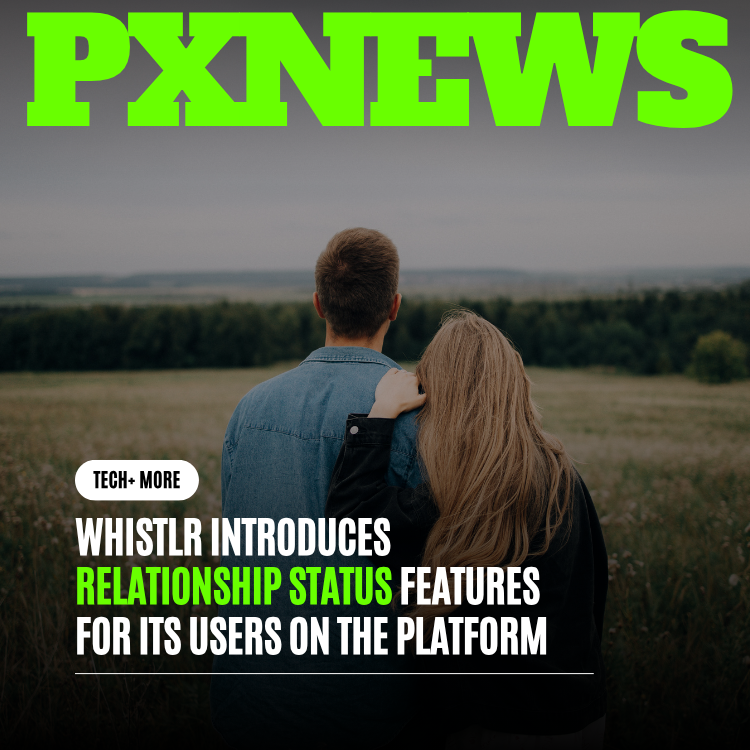
Whistlr is introducing relationship status features designed to help users express meaningful connections with more context, control, and personality. The update gives people a clearer way to share whether they are in a relationship, engaged, married, partnered, or simply choosing to highlight someone important in their life—without surrendering the privacy and consent that personal details deserve.
The feature reflects a broader shift in social networking: users want profiles that feel human, current, and useful without forcing every personal detail into a public broadcast. Whistlr's relationship status tools are built around mutual confirmation, flexible visibility, and privacy-first profile design so users can celebrate connections without giving up control.
"Relationship status has always been one of the most personal profile details online. We wanted to rebuild it for a modern social platform where consent, visibility, and emotional context matter as much as the label itself."
— ETAPX Product Team
Rethinking a Familiar Feature
Relationship status is not a new idea—it was one of the defining profile fields of the early social web. But the way it worked then now feels dated and, in hindsight, careless. A single person could claim a connection without the other's approval. A breakup became a public event broadcast to everyone at once. The status itself was a blunt, all-or-nothing label visible to your entire network whether you liked it or not.
Whistlr's update treats those old shortcomings as design problems to solve rather than quirks to accept. The result reframes relationship status as part of a user's identity layer—something expressive and personal, but governed entirely by consent and choice. It is the same familiar idea rebuilt for a generation that cares deeply about who controls their personal information.
What the Relationship Status Feature Adds
Users can now choose from standard relationship labels, create a more personal status, connect a partner profile, and decide who can see the update. For couples and close partners, the mutual confirmation flow prevents one-sided profile claims. Both people must approve the connection before it becomes visible.
The feature also supports relationship milestones, anniversary dates, and profile context that can appear on a user's public profile, private circles, or selected audience groups. That makes relationship status more than a static label. It becomes a controlled part of the user's identity layer on Whistlr.
- Mutual confirmation: Partner-linked statuses require approval from both users.
- Audience controls: Users can show relationship details publicly, privately, or only to selected circles.
- Profile personalization: Relationship status can appear as a profile highlight or remain tucked into profile details.
- Milestone support: Optional dates help users remember anniversaries and celebrate key moments.
How Mutual Confirmation Works
The heart of the feature is consent, expressed through a simple two-way flow. When one person links a partner, nothing becomes visible until the other agrees. This single design choice eliminates the awkward and sometimes harmful dynamic of one-sided claims that older platforms allowed.
- Initiate: A user selects a relationship label and chooses to connect a partner profile.
- Request: The proposed partner receives a private request to confirm the connection—no public hint appears in the meantime.
- Confirm or decline: The partner can approve, decline, or ignore the request entirely, with declines handled quietly.
- Set visibility: Once confirmed, each person controls who can see the status, independently of the other.
- Update anytime: Either person can change or remove the status later, without forcing a public announcement.
Why It Matters for Social Profiles
Social profiles are becoming less about follower counts and more about context. Relationship status helps friends, family, and communities understand the real-life connections behind a user's profile. For Whistlr, that fits into a larger product philosophy: build tools that support connection rather than performance.
By making the feature privacy-aware from the beginning, Whistlr avoids the pressure that often comes with personal profile updates. Users can share relationship details when they want to, with the people they choose, and in a way that respects both partners.
Built for Privacy and Consent
Relationship status can be sensitive, so Whistlr includes clear controls for editing, hiding, removing, or changing status without unnecessary public notifications. If a relationship changes, users can update their profile quietly or share the change when they are ready.
The system is also designed to prevent harassment and unwanted linking. Users can decline requests, block repeated attempts, and report abuse from the relationship status flow. These safeguards make the feature safer for everyday users while still allowing people to celebrate genuine connections.
"What sold me was that nothing goes public unless both of us say yes, and there's no big announcement when something changes. I can share that I'm partnered with the people who matter to me, and quietly update it if life changes. It finally feels respectful."
— Maya R., Whistlr user
Who the Feature Is For
The relationship status tools are intentionally flexible, because relationships themselves are. Couples who want to celebrate a milestone publicly can do exactly that, while those who prefer to keep things low-key can confine the detail to a private circle. People who simply want to highlight someone important—a partner, a person they are building something with—have a way to do so without being forced into a rigid category.
That flexibility extends to people who would rather share nothing at all. Because every part of the feature is opt-in and controlled by the user, those who prefer privacy are never pressured to participate. The feature adds an option to the profile; it never imposes an obligation.
Part of a More Human Whistlr
Whistlr's relationship status update is part of ETAPX's broader push to make social profiles more expressive, more useful, and more aligned with real-world identity. As the platform expands profile customization, relationship tools give users another way to turn a digital account into a living representation of who they are and who matters to them.
Frequently Asked Questions
Can someone list me as their partner without my permission?
No. Partner-linked statuses require mutual confirmation—the connection stays invisible until both people approve it. You can decline or ignore any request, and nothing about it appears publicly in the meantime.
Who can see my relationship status?
You decide. Audience controls let you show relationship details publicly, keep them private, or share them only with selected circles. Each partner sets their own visibility independently.
What happens if my relationship changes?
You can edit, hide, remove, or change your status at any time without triggering unnecessary public notifications. You can update quietly or share the change when you are ready—there is no forced announcement.
Do I have to use this feature?
Not at all. Every part of relationship status is opt-in. If you prefer to share nothing, the feature simply stays unused; it adds an option to your profile without ever imposing an obligation.
How does Whistlr prevent harassment through this feature?
The system lets users decline requests, block repeated attempts, and report abuse directly from the relationship status flow. These safeguards are built in from the start to keep the feature safe for everyday users.